Insulation & Job Site Tools

Insulation, Drywall Tools
& Job Site Supply

Fiberglass batt, rigid foam, acoustic insulation, spray foam, and the professional drywall tools your crew actually uses — all in stock for same-day pickup.

R-13 – R-38
Full R-Value Range
Batt + Rigid
Multiple Insulation Types
Pro Tools
Drywall & Finishing
Same-Day
Pickup Available
Contractor Pricing

Get A Quote On
Insulation & Tools Today

Same-day response. Contractor accounts with bulk pricing available — fill out the form or call us directly.

We respond within the hour
Get Contractor Pricing
R-13
3½" Cavity
2×4 interior walls
R-19
6" Cavity
2×6 / 6" metal stud
R-21
High-Density
3½" wall — premium fill
R-30
Ceiling / Attic
Standard attic spec
R-38
High-Performance
Energy-efficient attic

Insulation Products We Stock

Fiberglass batt, rigid foam, acoustic, and spray foam — every type for walls, ceilings, and specialty applications.
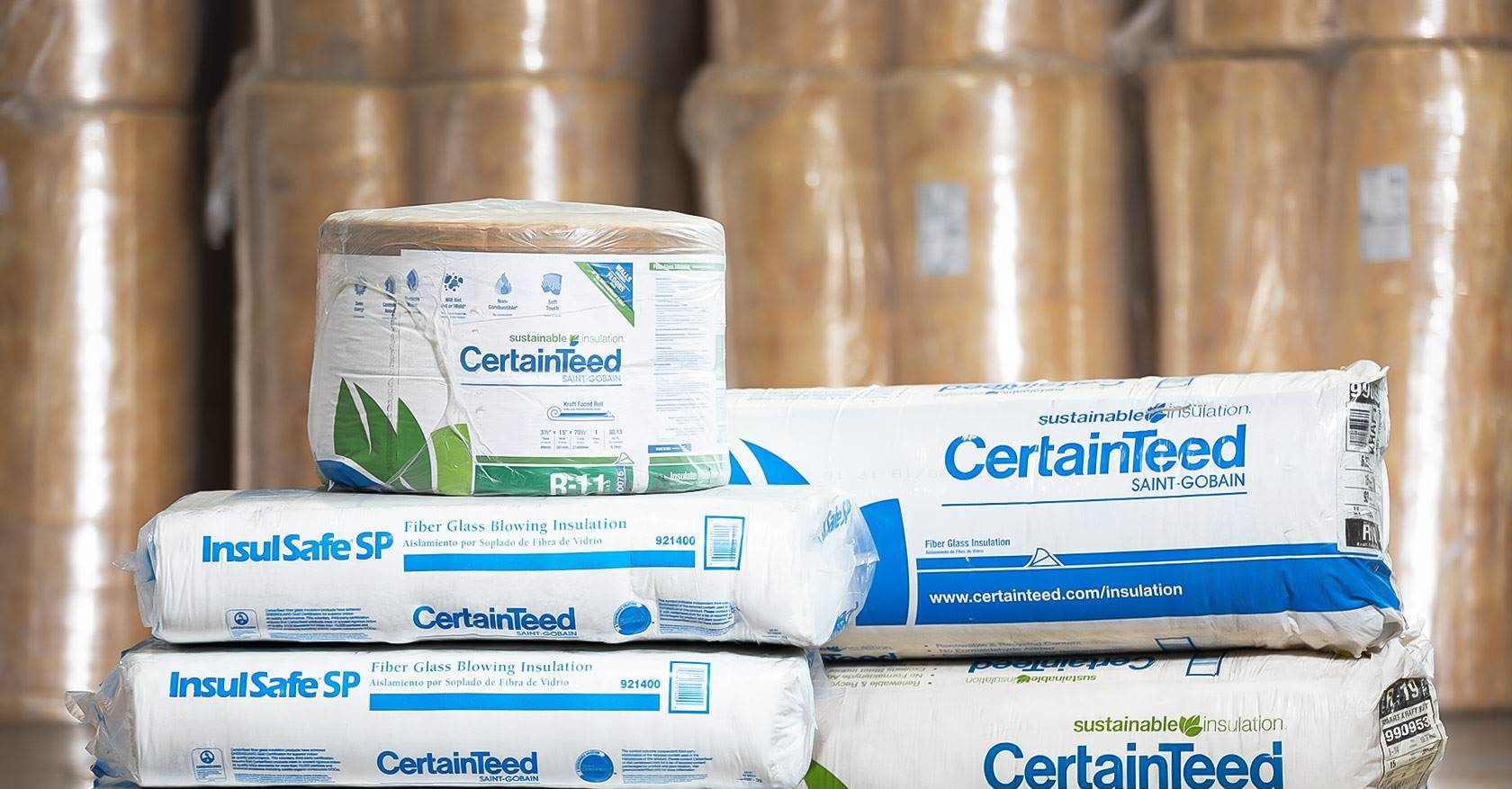
Insulation Products In Stock
Insulation — All Types

Fiberglass batt, rigid foam board, acoustic insulation, and spray foam — every type stocked for walls, ceilings, and specialty applications.

  • Fiberglass batt — R-13 through R-38, faced & unfaced
  • Rigid foam (XPS & polyiso) — continuous insulation, R-5 to R-6.5/in
  • Acoustic insulation — higher density for STC improvement
  • Spray foam, fire-rated foam, and acoustic sealant
Get Contractor Pricing →
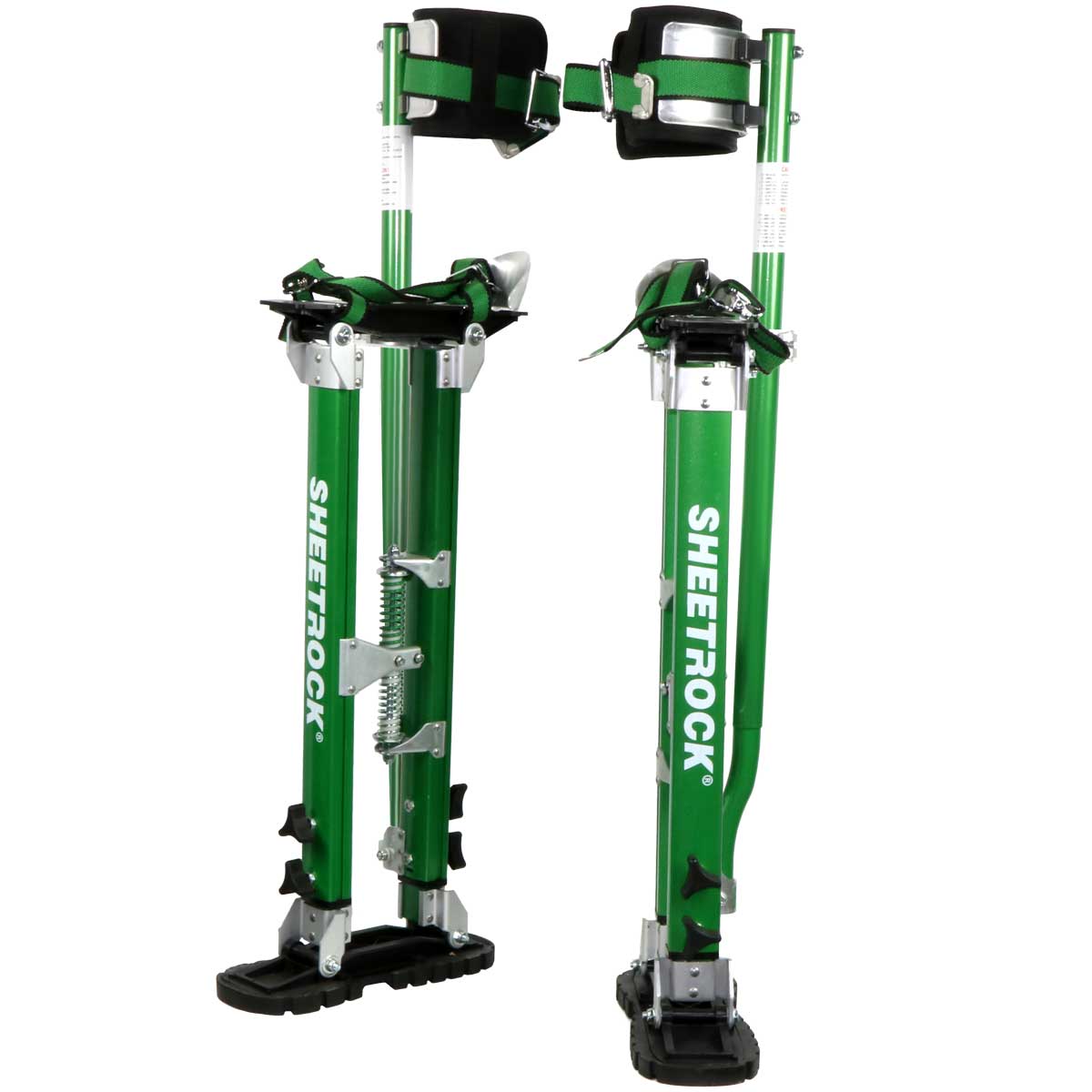
Drywall & Job Site Tools
Drywall Lifts & Stilts Equipment
Drywall Lifts & Stilts

Ceiling drywall lifts and aluminum stilts — the two tools that make a one-man ceiling install possible and keep your crew off ladders.

  • Drywall panel lifts — holds sheets at ceiling height
  • Adjustable aluminum stilts — 18" to 30" rise
  • Reduces crew size and speeds up ceiling boards
  • Available to purchase — call for inventory
Get Contractor Pricing →
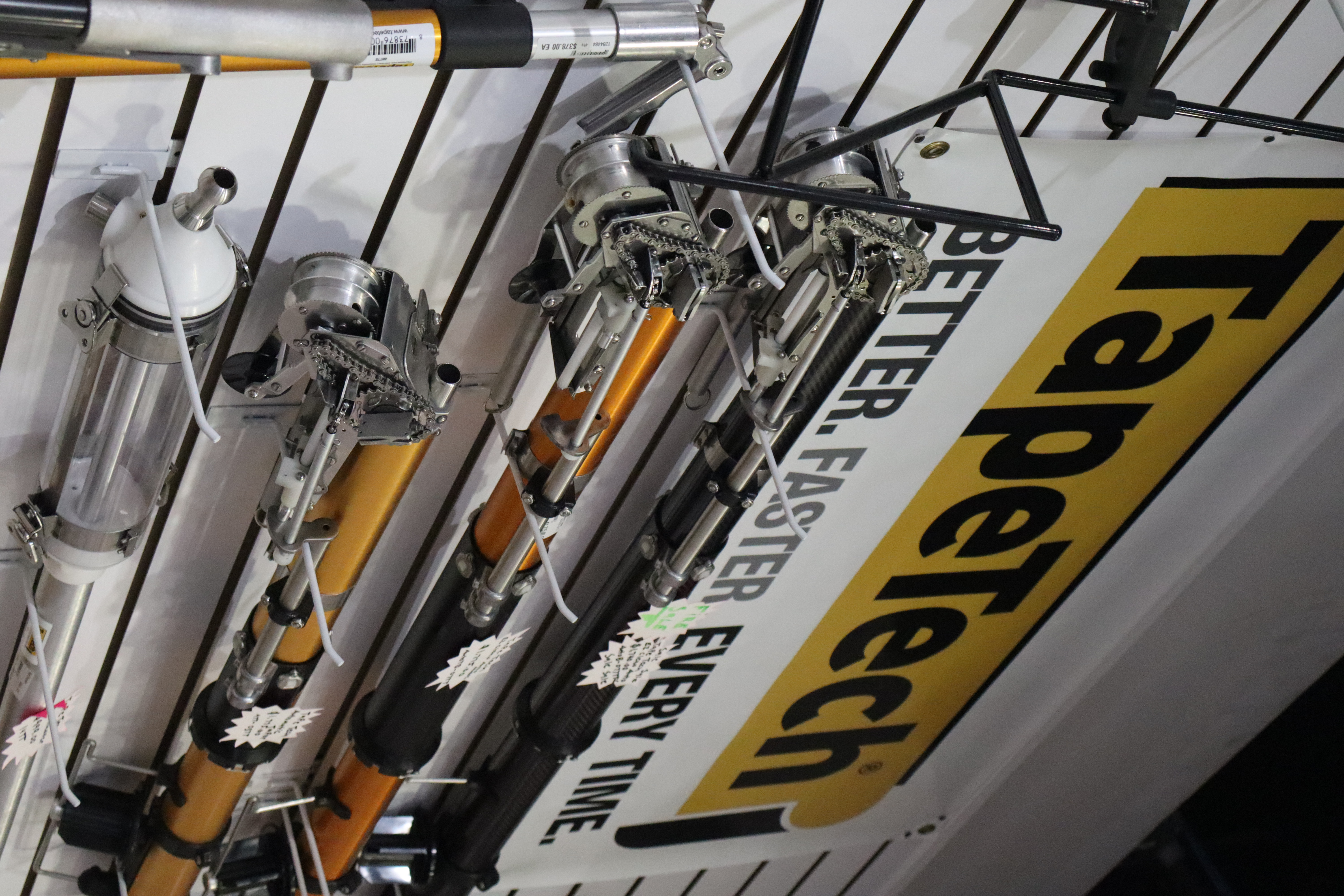
Taping & Finishing Tools In Stock
Taping & Finishing Tools

Everything from 4" to 12" taping knives, corner tools, mud pans, and pole sanders — professional finishing tools for clean, fast drywall work.

  • Stainless steel taping knives — 4", 6", 8", 10", 12"
  • Corner finishing tools — inside and outside
  • Mud hawks and pans — plastic and aluminum
  • Pole sanders and drywall sanding screens
Get Contractor Pricing →
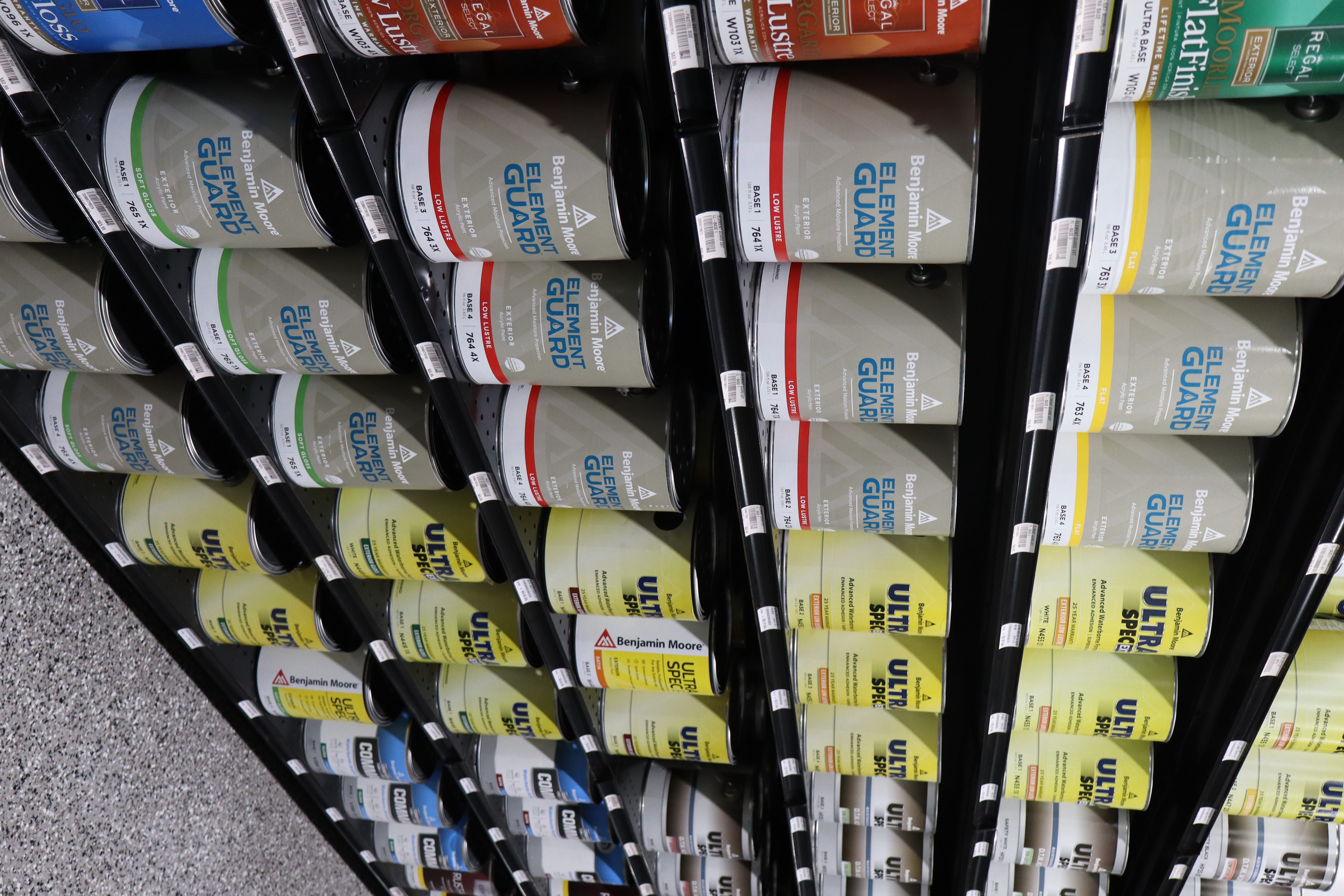
Spray Foam & Sealants In Stock
Spray Foam, Caulk & Sealants

Single-component spray foam for air sealing around pipes, windows, and penetrations — plus acoustic sealant for smoke and sound assemblies.

  • Expanding foam — minimal, standard, and max fill
  • Fire-rated foam for penetration sealing
  • Acoustic sealant (non-hardening) — for STC walls
  • Painter's tape, joint tape, and mesh tape
Get Contractor Pricing →
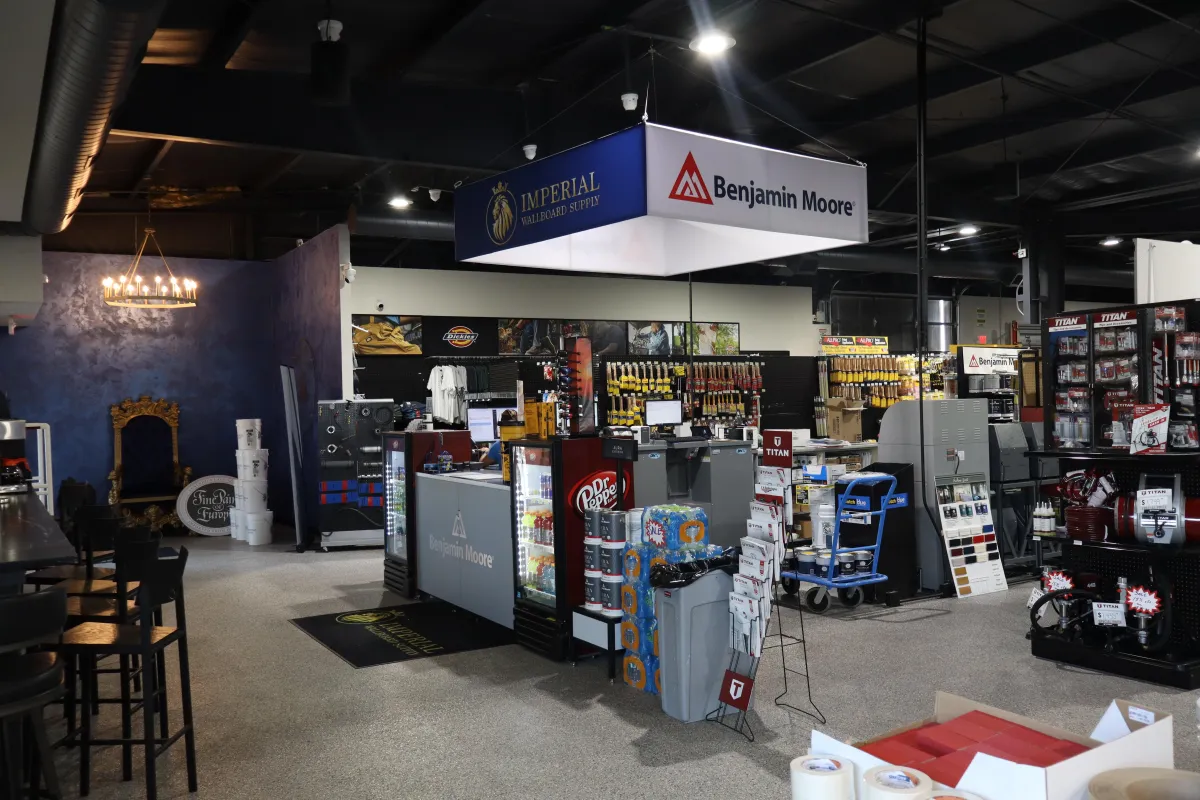
IWS Showroom
R-13
→R-38
Full Range In Stock

Everything to Finish the Job. One Stop.

Insulation, finishing tools, spray foam, and sealants — the stuff you need to close out a job, stocked and ready the day you need it.

Full R-Value Range In Stock

R-13 through R-38 — wall batts, ceiling batts, and acoustic insulation stocked so you can pull what you need without waiting on a delivery.

Pro Finishing Tools

Taping knives, corner tools, pole sanders, mud pans, stilts — the finishing tools your crew needs to close out a board job clean and fast.

Everything on One Ticket

Board, insulation, mud, tape, tools, and spray foam — pull it all from IWS in one trip instead of splitting your order across three suppliers.

Same-Day Pickup

Need insulation for a job starting tomorrow? Call before close and pick up in the morning — no backorders, no waiting on a truck.

Insulation Selection Guide

Use these tables to spec the right R-value and product type for each application. Texas energy code minimums included.

R-Value by Wall Cavity
2×4 Wall (3½")R-13 standard / R-21 high-density
2×6 Wall (5½")R-19 standard / R-21 fits with space
6" Metal StudR-19 batt — fits friction in 6" cavity
3⅝" Metal StudR-13 — friction fit standard
Continuous CIRigid foam exterior sheathing — add R-5 to R-10
Ceiling / Attic R-Value (Texas)
R-30Minimum code — Houston climate zone
R-38Recommended for energy efficiency
R-49+High-performance / passive house spec
Faced vs UnfacedUnfaced when layering over existing insulation
Insulation Type Comparison
Fiberglass BattMost common — low cost, friction fit, easy install
Rigid Foam (XPS)R-5/in — continuous insulation, moisture-resistant
Polyiso FoamR-6.5/in — best R-value per inch, roofing common
Acoustic BattHigher density — absorbs sound, not just thermal
Spray Foam Type Guide
Minimal ExpandingAround windows/doors — won't bow the frame
Standard ExpandingGeneral gap and crack filling — most common
Max FillLarge voids, block cores — aggressive fill
Fire-RatedRequired at all penetrations in fire-rated assemblies

Insulation Calculator

Enter your wall or ceiling dimensions and cavity type — get an instant bag or roll count. 10% waste included.

Job Dimensions
Your Material Estimate
Insulation Bags
Bags needed — includes 10% waste
Batt Width
Correct width for your spacing
Total Area
Net square footage to insulate
Get Contractor Pricing on All of This

Bag coverage varies by manufacturer. Estimates are based on typical bag coverage for each R-value. Always verify the sq ft per bag on the product label and round up to the next full bag.

R-13 Through R-38
Full range stocked daily
Pro Tools In Stock
Finishing knives, stilts, sanders
Same-Day Pickup
No waiting on deliveries
One Stop
Board + insulation + tools — one trip

Insulation & Tools FAQ

What R-value do I need for walls in Houston?
Houston is in IECC Climate Zone 2A. For wood-framed walls, the energy code minimum is R-13 in a 2×4 wall or R-20 in a 2×6 wall. In practice, most residential new construction here uses R-13 or R-15 in a 2×4 wall and R-19 in a 2×6 wall. For steel-framed walls, you often need to compensate for thermal bridging through the studs — a layer of continuous rigid foam on the exterior adds R-5 to R-10 and dramatically improves the effective R-value of the assembly. Call us and we'll help you spec the right combination.
Faced or unfaced insulation — what's the difference?
Faced insulation has a kraft paper or foil vapor retarder on one side — it's used when you want a vapor control layer and the facing goes toward the warm side of the assembly (in Houston, that's the interior in summer). Unfaced insulation has no facing and is used when you're layering over existing insulation in an attic, in interior partition walls where no vapor retarder is needed, or when a separate vapor barrier is being installed. In most Houston climate applications, unfaced is common in attics because you're typically building up depth over existing insulation. If you're unsure, call us — getting this wrong can cause moisture problems.
Do I need acoustic insulation in addition to resilient channel?
For most residential sound isolation (party walls in multi-family, home theaters), acoustic insulation plus resilient channel plus double-layer drywall is the standard stack. The acoustic batt absorbs sound energy within the cavity, the resilient channel decouples the drywall from the framing, and the mass from two layers of drywall blocks transmission. Any one of these alone gives modest improvement — the combination is where you hit STC 55+. If your spec just says "improve STC from 35 to 50," acoustic insulation plus a single RC-1 layer and one extra drywall layer typically gets you there. Call us with your target STC and we'll help you design the assembly.
What spray foam should I use around window rough openings?
Always use minimal-expanding foam (sometimes called "window and door" foam) around rough openings. Standard or max-fill expanding foam generates significant pressure as it cures — enough to bow a window or door frame and prevent it from opening and closing correctly. Minimal-expanding foam fills the gap for air sealing without creating that pressure. Spray it in two thin passes rather than one thick fill. Around rough framing (not the window unit itself), standard expanding foam is fine.
Do you stock drywall stilts and can anyone buy them?
Yes — we carry aluminum drywall stilts and drywall panel lifts for purchase. These are contractor tools, not rental equipment, and anyone can buy them. Stilts typically run 18"–30" adjustable rise and are used by drywall tapers and painters to work at ceiling height without constantly repositioning a ladder. Panel lifts hold ceiling drywall sheets at height while you fasten them — essential for one- or two-person ceiling work. Call us to confirm current inventory before making the trip.

Need Insulation or Tools Today?

Call us to confirm stock and pull a same-day order — or fill out the quote form and we'll come back with contractor pricing across everything you need.